
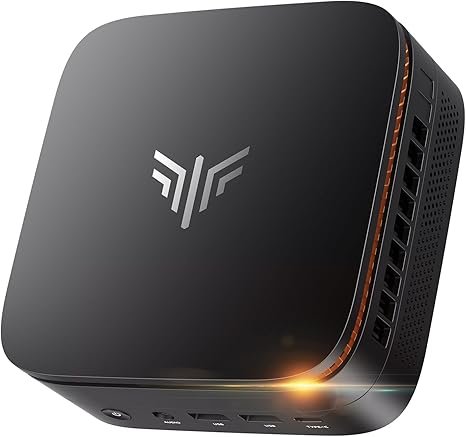

About this item
Pinova P1 Mini PC Computer With AMD Ryzen Processor
The Pinova P1 Mini PC Computer With AMD Ryzen Processor is a compact desktop computer built to deliver efficient general‑purpose computing in a small form factor. Powered by an AMD Ryzen 3 series mobile processor, this mini PC combines reliable performance with strong connectivity, multiple display support, and expandable storage — making it suitable for home offices, study setups, media centers, and light creative work without the size and power demands of a full desktop tower.
This review breaks down its design, specifications, real‑world performance, pros and cons, and whether it’s a smart choice for everyday computing needs.
Key Specifications
| Feature | Details |
|---|---|
| Product | Pinova P1 Mini PC Computer |
| Processor | AMD Ryzen 3 mobile APU |
| Cores/Threads | 4 cores / 4 threads |
| Clock Speed | Up to ~3.7 GHz boost frequency |
| Memory | Typically 16 GB DDR4 RAM (expandable) |
| Storage | SSD (e.g., 256 GB/512 GB NVMe), expandable |
| Graphics | AMD Radeon Vega integrated graphics |
| Display Support | Triple 4K output (HDMI, DP, USB‑C alt mode) |
| Ports | Multiple USB, HDMI, DisplayPort, Ethernet, audio |
| Connectivity | Wi‑Fi, Bluetooth |
| Use Cases | Office, home media, productivity |
Compact Design & Build Quality
The Pinova P1 Mini PC is engineered in a small, rectangular chassis that fits easily on a desk, shelf, or behind a monitor using a VESA mount. Its compact footprint and lightweight body make it an excellent choice where space is limited or a discreet desktop solution is needed.
Build materials are solid enough for daily use, and venting and fan design keep temperatures manageable during typical workloads.
Processor & Performance
At the heart of this mini PC is an AMD Ryzen mobile processor — often a Ryzen 3 4300U or similar — a quad‑core chip with boost capabilities well above traditional entry‑level CPUs. This gives the system enough power for:
Office productivity (documents, spreadsheets, email)
Web browsing & multitasking
Video playback and streaming (including 4K content)
Light photo/video editing and creative tools
Home entertainment hubs and HTPC setups
Integrated AMD Radeon Vega graphics provide better performance than many typical entry‑level PC graphics solutions, helping with visual tasks and smooth multi‑display output.
Memory & Storage — Expandable for Growth
The Pinova P1 typically ships with 16 GB DDR4 RAM and a fast SSD (commonly 256 GB or 512 GB), sufficient for most workflows without lag. Both RAM and storage are expandable, often up to 64 GB RAM and multiple terabytes of SSD space, letting you future‑proof the system for heavier usage or local media libraries.
Display & Connectivity Features
A standout capability of this mini PC is its multi‑monitor support. It can simultaneously drive three 4K displays via a combination of HDMI, DisplayPort, and USB‑C (with DisplayPort Alt Mode), making it ideal for multitasking setups, digital signage, or productivity stations.
Connectivity includes:
Multiple USB 3.2 ports for peripherals
Gigabit Ethernet for stable wired networking
Wi‑Fi and Bluetooth for wireless devices
3.5 mm audio output for speakers or headphones
These features expand its usefulness beyond a basic PC into a capable small desktop for diverse applications.
Real‑World Usage & Versatility
The Pinova P1 Mini PC performs well in everyday computing tasks and entertainment. Even with regular multitasking — browser tabs, office apps, media streaming — the system remains responsive and reliable.
Its compact size and low power draw make it a comfortable choice for:
Home offices and remote workstations
School and study setups
Media center PCs
Digital signage or kiosk use
Basic creative workflows
It is not designed for heavy gaming or demanding 3D rendering like full desktops with discrete GPUs — it excels in productivity, streaming, and general usage rather than hardcore graphics workflows.
Pros & Cons
| Pros | Cons |
|---|---|
| Powerful AMD Ryzen performance in a small chassis | Not ideal for high‑end gaming |
| Compact and space‑saving design | Integrated graphics limited vs discrete GPUs |
| Triple 4K display support | Upgrades may require technical skill |
| Expandable RAM and storage | Fan noise under heavy sustained load |
| Rich I/O and connectivity options | SSD capacity varies by configuration |
| Suitable for home, office, and entertainment | Not a full workstation replacement |